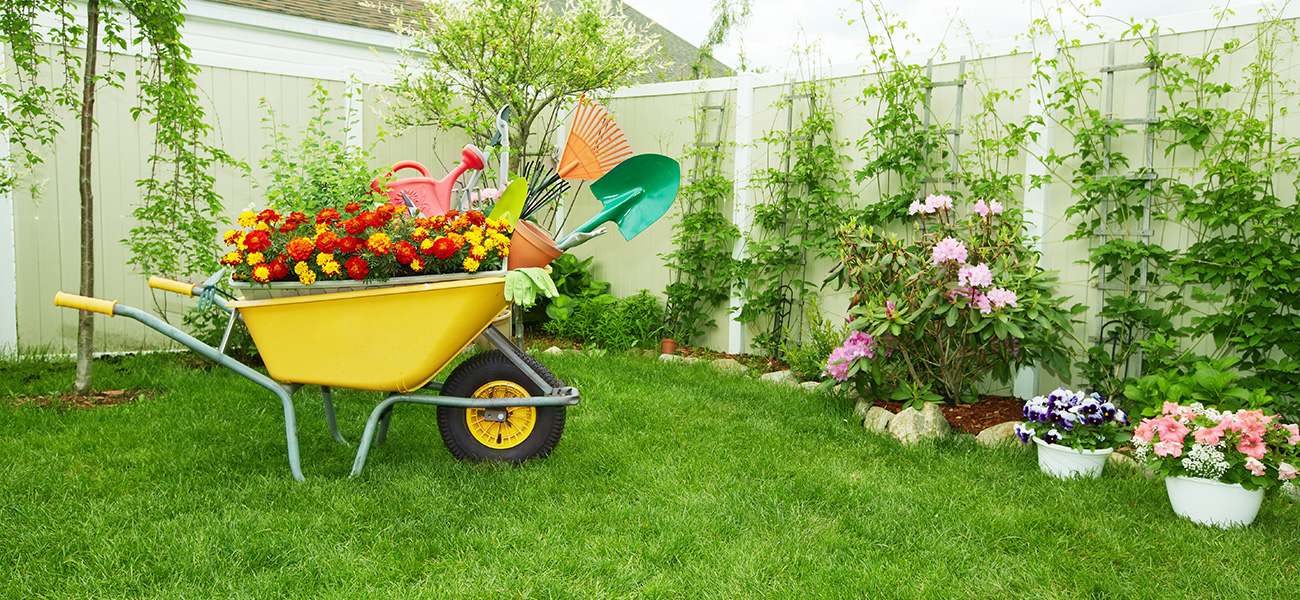


Acton gardeners same day emergency hedge pruning W3
Posted on 11/10/2026
Acton gardeners same day emergency hedge pruning W3: fast, safe help when hedges need urgent attention
If a hedge has suddenly become a hazard, blocked a driveway, brushed against a path, or been battered by wind overnight, you do not always have the luxury of waiting until next week. That is where Acton gardeners same day emergency hedge pruning W3 comes in. It is the practical, local answer when a hedge has become too overgrown, unstable, messy, or simply awkward to ignore any longer.
In real life, these situations are rarely neat. One minute the garden looks manageable; the next, branches are leaning into the pavement, rain has made everything heavier, and the front of the house feels closed in. This guide explains what emergency hedge pruning actually involves, how it works in W3, when it makes sense, and what to expect from a professional visit. You will also get a clear checklist, a comparison table, and a few common mistakes to avoid. Straightforward, useful, no fluff.

Why Acton gardeners same day emergency hedge pruning W3 matters
Emergency hedge pruning is about more than making a boundary look tidy. When a hedge grows too wide, too tall, or too dense, it can start creating real problems: blocked access, poor visibility, broken light, extra wind drag, and even strained fence panels or leaning stems. In a busy area like W3, those issues can spill quickly from "a bit untidy" into "needs sorting today".
There is also the timing side. After a stormy night, hedges can split, sag, or shed heavy branches. If that growth is pressing onto a path, road edge, shared driveway, or neighbour's side, waiting often makes the job harder and the risk greater. That is why fast hedge pruning is often requested after bad weather, before a property viewing, or when overgrowth is affecting routine use of the garden.
It is worth saying plainly: not every hedge needs emergency work. But when you can see damage, obstruction, or obvious hazard, quick pruning can prevent a small issue from turning into a bigger repair job. For related garden resilience advice, our guide on shielding gardens from severe weather is a helpful companion read.
How Acton gardeners same day emergency hedge pruning W3 works
Same-day emergency hedge pruning is usually a rapid-response service rather than a long planned maintenance visit. The goal is to stabilise, reduce risk, and restore control quickly. A good local gardener will normally begin with a brief assessment of the hedge's condition, access, and any immediate safety concerns. Then the work is prioritised around what needs to be removed first and what can wait for a follow-up visit.
That first assessment matters more than people sometimes think. A hedge that looks like it just needs a trim may actually have weak internal growth, storm-split branches, or bird nesting activity to consider. Equally, an apparently dramatic hedge can sometimes be made safe with careful reduction rather than a heavy cut. To be fair, the best pruning decisions are often the ones that look calm and boring from the outside. That is a good sign.
In practice, same-day hedge work often includes:
- rapid inspection of the hedge line and any surrounding hazards
- selective pruning to reduce overhang or collapse risk
- careful shaping so the hedge still looks presentable
- collection and handling of cuttings
- basic advice on whether a second visit is needed for recovery pruning
For hedges that have simply outgrown their space rather than suffered damage, the approach may be more about control than rescue. If you are also thinking ahead to long-term hedge structure, hedge trimming in Acton is a sensible route once the immediate issue has been dealt with.
Key benefits and practical advantages
There is a reason people search for urgent hedge pruning rather than waiting for a routine slot. The benefits are practical, immediate, and frankly a bit relieving when you have been staring at an unruly hedge for days.
- Fast hazard reduction: Removes branches that are blocking routes, scraping surfaces, or interfering with access.
- Better visibility: Important for driveways, front gardens, corners near roads, and shared entrances.
- Cleaner appearance: A hedge that has suddenly flared up after growth spurts or weather damage can be brought back under control.
- Lower risk of further damage: Reducing strain on stems, fences, walls, and neighbouring planting can prevent a bigger job later.
- Less stress: Let's face it, an overgrown hedge can nag at you every time you look outside. Sorting it quickly can feel like getting a weight off your shoulders.
There is a quieter benefit too. Well-managed emergency pruning often preserves the hedge itself. If the right sections are cut at the right time, the plant can recover with less shock than if it is left to snap, split, or collapse on its own. That is why experienced gardeners tend to prune with restraint first and more aggressively only where needed.
For homes that value a neat boundary, the result can also improve kerb appeal almost immediately. If privacy is the issue, pruning does not always mean losing screening. In many cases, a targeted reduction keeps the hedge functional while restoring shape. For a broader look at privacy planting, see rapid-growth hedges for ultimate privacy.
Who this is for and when it makes sense
Emergency hedge pruning is not just for dramatic storm damage. It is for anyone dealing with a hedge that has become awkward, unsafe, or unexpectedly disruptive. In W3, that often includes front gardens, shared boundaries, rental properties, and homes with tight access where overgrowth causes immediate inconvenience.
This service usually makes sense if you are facing any of the following:
- branches hanging over a pavement or driveway
- a hedge leaning after wind or wet weather
- restricted entry to bins, gates, paths, or parking
- neighbour complaints about encroachment
- visibility problems near a corner, junction, or frontage
- broken, torn, or split growth that needs safe removal
- a garden that has become hard to use because the hedge has taken over
It is also useful for landlords, letting agents, and property managers who need a fast tidy-up before inspections, new tenants, or sale photographs. In those cases, a neat, controlled cut can make a surprisingly big difference. Small job, big effect. Funny how that works in gardens, isn't it?
For ongoing support after the emergency is handled, a more regular service may be the better fit. garden maintenance in Acton can help stop hedges getting back to crisis point.
Step-by-step guidance
If you are arranging same-day hedge pruning, here is the kind of process that usually leads to the best outcome. Even if you are not doing the work yourself, it helps to know what a professional visit should look like.
- Identify the immediate problem. Is it unsafe overhang, weather damage, access blockage, or simply heavy overgrowth? The answer affects urgency and method.
- Take a quick look at boundaries. Check whether the hedge is near fences, walls, pathways, windows, or cables. This helps the gardener plan the cut safely.
- Photograph the issue if needed. A few clear pictures can be useful if you are sending a request for same-day help.
- Clear access. Move bins, toys, garden furniture, dog items, or anything fragile out of the working area.
- Agree the priority. Usually the first job is to make things safe and functional, then tidy the profile.
- Prune with the hedge's health in mind. Good pruning is selective. It should avoid stripping too much live growth at once.
- Remove debris promptly. Cuttings left piled at the base can trap moisture and create a mess after rain.
- Review the result. Ask whether the hedge needs a follow-up trim, formative work, or seasonal care later on.
If the hedge has been tangled with climbers or ivy, the job can become slower. In that case, tackling the underlying growth problem may be important too. our ivy removal guide explains why that matters.
Expert tips for better results
Good hedge pruning is part technique, part timing, part judgement. You can cut a hedge back quickly and still leave it healthy, but only if you read the plant correctly. That is the bit people sometimes underestimate.
- Do not chase a perfect shape in one pass. Emergency pruning should stabilise first. Fine shaping can come later.
- Watch the hedge species. Some hedges recover well from a harder reduction, while others prefer lighter cuts. A one-size-fits-all approach is rarely ideal.
- Respect the weather. Wet, windy, or frosty conditions can make hedge work messier and less precise. Timing really matters, especially in winter.
- Look for hidden dead wood. A hedge may appear thick on the outside but be weak within. Removing unstable material early avoids breakage later.
- Keep the base slightly wider than the top. That classic taper shape helps light reach lower growth and keeps the hedge fuller over time.
A small but important point: after a hard prune, the hedge may look a little bare for a short while. That is not always failure. Sometimes it is the correct first step toward healthier regrowth. Patience, annoying as it can be, pays off. If you want ideas on more decorative shaping, hedge trimming shapes and techniques is worth a look once the urgent work is complete.
And if your boundary hedge is part of a wider low-maintenance design, you may also find value in easy low-maintenance garden ideas. A practical garden tends to stay calmer overall.
Common mistakes to avoid
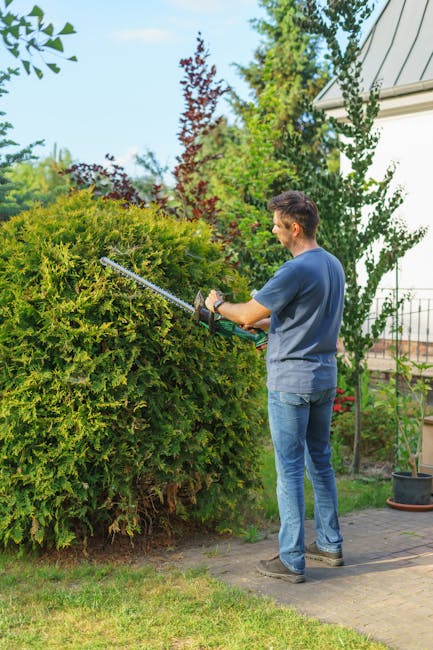
Emergency pruning is one of those jobs where haste can help, but only if the approach is sensible. A rushed cut in the wrong place can create more problems than it solves.
- Cutting too much at once: Removing a huge volume of foliage can shock the hedge and leave it thin or patchy.
- Ignoring nesting birds: In the UK, hedge work should be approached carefully during nesting season. Always check before cutting.
- Leaving ragged stubs: Sloppy cuts can slow recovery and spoil the hedge line.
- Forgetting the aftermath: A hedge can look fine for a day but still need follow-up care, watering, or feeding depending on the species and conditions.
- Using the wrong tools: Dull blades tear instead of cut. That is rough on the plant and, to be honest, rough on your nerves too.
Another common issue is delay. People often notice a hedge getting out of hand, then wait until a branch finally snaps or a neighbour mentions it. If the hedge is already touching structures or obstructing a route, earlier intervention is almost always easier and cheaper than waiting for an outright failure.
Tools, resources and recommendations
For emergency hedge pruning, the right tools depend on hedge size, thickness, and access. A good professional will select tools to match the job rather than forcing the hedge to suit the kit. That distinction matters more than people think.
| Tool or resource | Best use | Why it matters |
|---|---|---|
| Hand secateurs | Small stems and precise finishing cuts | Offer control where accuracy matters |
| Hedge trimmers | General hedge shaping and reduction | Help speed up larger pruning work |
| Long-reach tools | Tall hedges and awkward access points | Reduce the need for unsafe stretching or overreaching |
| Rakes and tarps | Collecting and clearing clippings | Keep paths safer and the finish cleaner |
| Protective gloves and eye wear | Safe handling of cut material | Useful around thorny or dense evergreen hedges |
For people who like to understand the broader toolkit behind good garden work, essential gardening tools every green thumb needs gives a solid overview. If the hedge is part of a larger tidy-up, services such as gardening services in Acton or hedge trimming in Acton can be a sensible follow-on after the urgent visit.
Law, compliance, standards, or best practice
Hedge pruning is a garden task, but it is not something to treat casually. In the UK, the main practical concerns are neighbour relations, access safety, and wildlife protection. You do not need to turn a garden job into a legal saga, but you do need to act carefully.
Best practice usually means:
- checking for nesting birds before cutting
- avoiding unsafe work near traffic, public paths, or unstable structures
- handling clippings so they do not block drains, routes, or communal spaces
- respecting boundary lines and keeping communication calm if a shared hedge is involved
- using competent methods and safe equipment, especially on tall or dense hedges
If the hedge is near a wall, fence, or tree with obvious structural issues, the situation may call for more than pruning alone. In those cases, a broader assessment is wise. tree surgery in Acton can be relevant where woody growth or heavy limbs are part of the problem, and fencing in Acton may matter if the hedge has caused, or revealed, a boundary issue.
For customers, trust also comes from how a business handles practical matters like safety, payments, and complaints. It is reassuring when those basics are clear before the job even starts. You can review insurance and safety, health and safety policy, payment and security, and complaints procedure if you want that extra peace of mind.
Options, methods, or comparison table
Not every hedge problem needs the same solution. Sometimes you want a light recovery trim. Sometimes you need a hard reduction. And sometimes the best move is to do the urgent safety work now, then return later for proper reshaping. Here is a simple comparison to help you think it through.
| Method | Best for | Pros | Watch-outs |
|---|---|---|---|
| Light emergency trim | Minor overhang or quick tidying | Fast, neat, minimal stress on the hedge | May not solve major obstruction |
| Selective reduction | Storm-damaged or uneven hedges | Balances safety with plant health | Needs a skilled eye to avoid uneven recovery |
| Harder corrective pruning | Severely overgrown hedges | Restores usable space quickly | Can expose bare sections if taken too far |
| Follow-up restoration pruning | Hedges needing staged recovery | Better long-term structure | Takes more than one visit |
In simple terms: the more stressed or overgrown the hedge is, the more likely it is to benefit from staged work. That is especially true if it is an evergreen hedge, a mixed boundary hedge, or a hedge already weakened by poor weather. For related planting ideas that hold structure well in British conditions, ground cover plants for UK gardens and evergreen climbers for shady corners can be useful if you are rethinking the wider garden layout.
Case study or real-world example
Here is a realistic scenario from the sort of job that comes up often. A homeowner in W3 notices that after a blustery night, the front hedge has bowed outward and started brushing the pavement. One section near the gate is torn, and the lower growth has bent under the weight of wet leaves. The family still needs the front path clear for the school run and a parcel delivery later that day.
Rather than waiting for the weekend, the priority is a same-day visit. The gardener trims back the outer growth, removes the torn branches, restores a safe walking line, and leaves the hedge looking clean without stripping it bare. The whole point is not perfection. It is recovery, access, and dignity for the garden all in one go. The hedge still looks like a hedge. It just no longer looks like it is trying to escape.
A week later, the owner may decide to book a fuller hedge-trimming session once the plant has settled. That staged approach is often the smartest one. Quick fix first. Better structure later. Simple, but effective.
Practical checklist
Before you request same-day emergency hedge pruning, run through this checklist. It keeps things calm and helps the gardener work faster when they arrive.
- Identify whether the issue is safety, access, appearance, or weather damage
- Check if the hedge is touching paths, roads, driveways, windows, or fences
- Look for obvious splits, hanging stems, or fallen debris
- Make sure there are no pets, toys, or garden furniture in the working zone
- Take a couple of photos if you want to show the problem clearly
- Ask whether the hedge is likely to need a follow-up visit
- Confirm how cuttings will be cleared away
- Review any relevant safety or service information if you are hiring someone new
- Think about whether the hedge is part of a bigger garden maintenance issue
- After the cut, keep an eye on recovery for the next few days
If the wider garden is also looking a bit tired, it can be efficient to bundle the work. Services such as lawn care in Acton, lawn mowing in Acton, patio cleaning in Acton, and decking services in Acton can help bring the whole outdoor space back into shape. A tidy hedge with a messy patio next to it can feel a bit unfinished, you know?
Conclusion
Acton gardeners same day emergency hedge pruning W3 is for those moments when waiting is not the best option. Whether the hedge has been damaged by weather, outgrown its space, or started causing a nuisance at the boundary, a fast and careful pruning response can protect access, improve safety, and restore order quickly.
The best results come from sensible assessment, selective cuts, and a practical eye for what the hedge needs now versus what it can handle later. That balance matters. It keeps the garden usable today without sacrificing long-term plant health tomorrow.
Get a free quote today and see how much you can save.
If you want a garden that feels calmer, safer, and easier to live with, starting with the hedge is often a very good first move. One clear cut can change the whole feel of a space. Honestly, sometimes that is all it takes.

With a reputation as an expert gardener, Alison assumes the role of a proficient writer, assisting thousands of customers in their gardening endeavors. Her focus spans various topics related to gardening and landscaping.